
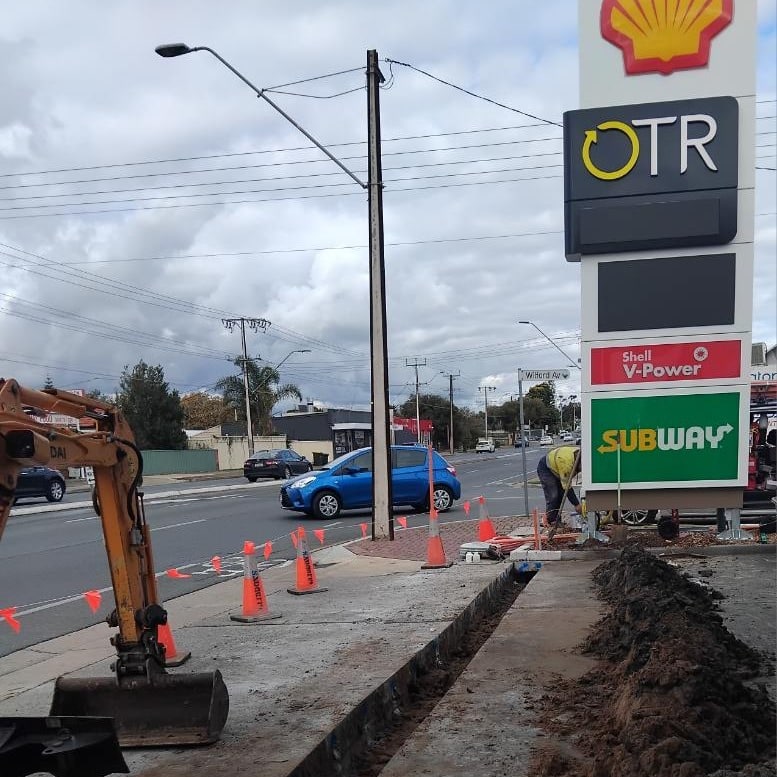
One of the most common questions we get asked at Dial A Digger is, “How much does excavator trenching cost?”
The honest answer is that trenching costs can vary significantly depending on the type of trench required, site conditions, access, and the amount of time the job will take to complete.
As a trenching contractor, we don’t price jobs based purely on the number of metres being excavated. Instead, we look at the factors that influence how long the work is likely to take. Since trenching is generally charged on an hourly basis, understanding these factors will help you better estimate what your project may cost.
What Determines the Cost of Excavator Trenching?
The biggest factor in trenching costs is time.
Before we can provide an accurate estimate, we need to understand:
- The length of the trench
- The width of the trench
- The depth of the trench
- Site access for machinery
- Ground conditions
- Whether there are existing underground services
- Any additional work required before or after trenching
These factors help determine how quickly and efficiently the trench can be completed.
Trench Length
Generally speaking, the longer the trench, the longer the job will take.
A 10-metre trench for a backyard electrical connection will obviously take less time than a 100-metre trench across a large property.
Length is usually one of the first things we ask about when discussing a trenching project.
Trench Width
Different projects require different trench widths.
A narrow trench for electrical conduit may be relatively straightforward, while a wider trench for drainage, plumbing, or retaining wall footings can require more excavation and more spoil removal.
The wider the trench, the more material needs to be excavated and managed.
Trench Depth
Depth can have a significant impact on trenching costs.
Some services only require relatively shallow trenches, while others may require much deeper excavation to comply with regulations or engineering requirements.
Deeper trenches generally take longer to excavate and often require additional care to ensure they are completed safely and accurately.
Site Access Can Make a Huge Difference
One of the first things we recommend customers consider is whether a machine can access the area.
Good machine access often means a trench can be completed quickly and efficiently.
Restricted access may require smaller machinery, additional labour, or alternative excavation methods, all of which can affect the overall cost.
If you’re requesting a quote, providing photos of the access can be extremely helpful.
Easy Trenching vs Difficult Trenching
Not all trenching projects are created equal.
To understand why costs can vary, let’s look at two common examples.
Example 1: Easy Trenching Through Lawn Areas
A straightforward trench from the back of a house to a shed through a grassed area is usually one of the easier jobs to estimate.
The trench length is known, access is generally good, and the ground is often relatively easy to excavate.
In situations like this, we can usually provide a fairly accurate indication of the time required.
Example 2: Trenching Around Existing Services or Through Hard Ground
Some jobs are much harder to predict.
If we’re trenching around existing electrical cables, water pipes, gas lines, or communications services, we need to excavate much more carefully.
Similarly, if the ground contains rock, rubble, old concrete, or compacted material, production rates can slow considerably.
In these situations, it’s difficult to know exactly what we’ll encounter until excavation begins, which can make estimating more challenging.
Why Other Trades Can Affect Trenching Costs
One of the biggest surprises for customers is that trenching projects often involve multiple trades.
For example:
- Electrical trenching may require an electrician.
- Plumbing trenching may require a plumber.
- Irrigation trenching may require a landscaper.
In many cases, we are asked to excavate the trench, leave it open while another trade installs their service, and then return later to backfill.
The challenge is that our schedule can become dependent on the timing of the other contractor.
While we may have completed our portion efficiently, delays from other trades can impact the overall project timeframe and cost.
This is why good communication between all parties is so important.
Why Excavator Trenching Offers Excellent Value
Most people contact us because they don’t want to dig a trench by hand.
And honestly, we don’t blame them.
Even relatively short trenches can require significant physical effort and time when completed manually.
An excavator allows the work to be completed faster, more accurately, and often to the exact specifications required for the service being installed.
At Dial A Digger, we charge based on our time. When we’re on-site, we’re focused on getting the job done efficiently and correctly. Customers can see the machine working, the trench progressing, and the project moving forward.
Our goal is always to deliver value for money by completing the work as efficiently as possible without compromising on quality.
How to Estimate Your Trenching Costs Before Requesting a Quote
If you’re trying to estimate the likely cost of a trenching project, start by asking yourself the following questions:
Is There Machine Access?
Can an excavator easily reach the area where the trench is required?
Access restrictions can significantly influence the time and equipment needed.
How Long Is the Trench?
Knowing the approximate trench length will help provide a more accurate estimate.
How Wide Does the Trench Need to Be?
Different services require different trench widths.
Understanding the specification can help avoid surprises later.
How Deep Does the Trench Need to Be?
Depth requirements vary depending on what is being installed.
Deeper trenches typically take longer and may require additional excavation effort.
What Are the Ground Conditions Like?
Consider whether the area contains:
- Hard ground
- Rock
- Rubble
- Existing concrete
- Paved surfaces
- Underground services
Or whether it is simply an open area with soft, easily excavated soil.
Ground conditions are often one of the biggest factors affecting trenching costs.
Final Thoughts
The cost of excavator trenching ultimately comes down to one thing: how long the job will take.
While trench length, width, and depth are important, site access, ground conditions, existing services, and coordination with other trades can all influence the final cost.
The more information you can provide when requesting a quote, the more accurately a trenching contractor can estimate your project.
If you’re planning a trenching project in Adelaide or Melbourne and would like advice on the best approach, the team at Dial A Digger can help you understand the requirements and provide practical guidance based on decades of trenching experience.